
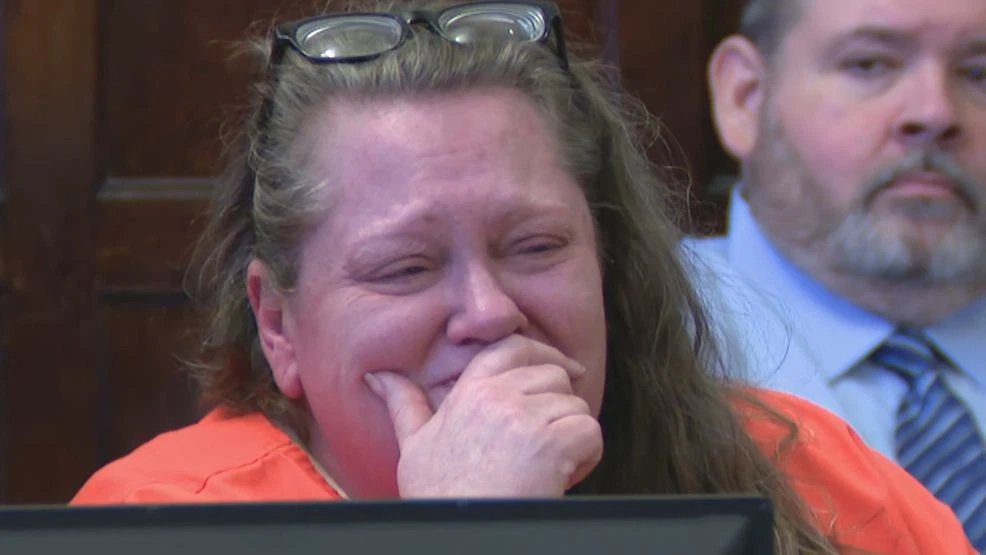
A Boone County judge sentenced Julie Miller to 15 years to life in prison in the starvation death of her 14-year-old daughter, Kyneddi Miller, marking a pivotal moment in a case that has drawn widespread outrage across West Virginia.
Here are five major developments from the hearing:
1. Miller Received the Maximum Sentence Allowed Under the Plea
Miller pleaded guilty in November 2025 to death of a child by a parent by child abuse — a charge carrying a sentence of 15 years to life in prison. The plea eliminated the possibility of life without mercy but preserved the potential for parole after 15 years.
Boone County Prosecuting Attorney Dan Holstein said the plea agreement ensured a penalty equivalent to a murder conviction while avoiding the risk that a jury might convict on a lesser charge of child neglect resulting in death, which carries a sentence of three to 15 years.
Circuit Judge Stacy Nowicki-Eldridge imposed the maximum sentence permitted under the law and ordered that if Miller is ever paroled, she would face 50 years of supervised release.
“If there’s ever a case that deserved to get the maximum penalty, this is it,” Holstein said after the hearing.
2. Miller Did Not Explicitly Accept Responsibility in Court
While Miller’s attorney, Ron Walters, told the court his client was remorseful and had reflected repeatedly on her “actions and inactions,” Miller herself did not directly accept responsibility during her statement.
Instead, she spoke briefly about loving and missing her daughter.
“I love my baby,” she said. “She was my world.”
Judges and parole boards typically weigh a defendant’s acceptance of responsibility when determining sentencing and future parole eligibility.
3. The Judge Described the Abuse as Long-Term and Intentional
Judge Nowicki-Eldridge characterized the neglect as prolonged and deliberate, emphasizing that it was not a single lapse in judgment.
“At some point, inaction becomes intentional non-action,” she said.
The judge described photos of Kyneddi as “beyond my level of understanding and comprehension” and stated plainly: “This child literally starved to death.”
Prosecutors have said Kyneddi suffered from an undiagnosed eating disorder and that caregivers failed to seek medical care. Court records allege she was denied necessary food and treatment in the months leading up to her death.
4. Kyneddi’s Sister Delivered an Emotional Victim Impact Statement
Kyneddi’s older sister addressed the court publicly for the first time, describing a close bond and her efforts to protect her younger sibling from instability in the home.
“A piece of sunlight was ripped out of the earth the day that she died,” she said.
Prosecutors noted she had previously attempted to shield Kyneddi from troubling conditions in the household. The court ordered that her name and image not be broadcast.
5. The Case Is Not Fully Resolved
The criminal proceedings continue for other family members.
Donna Stone, 78, is scheduled for trial later this month after her case was severed from Miller’s. Jerry Stone, 76, was ruled incompetent to stand trial in 2025 and committed to a mental health facility after attorneys cited significant cognitive decline.
Kyneddi was found dead in April 2024 at her grandparents’ home in the Morrisvale area. Her death has prompted intense scrutiny of the state’s child protection systems and broader calls for reform in how abuse and neglect cases are handled in West Virginia.
While Miller’s sentencing closes one chapter, legal proceedings and public questions surrounding the case remain ongoing.