House Bill 4413 would outlaw syringe programs and allow a 120-day transition period for existing programs to shut down, though no syringe services would be permitted during that time.
Any violations could result in fines of up to $2,500 per day.
“It’s something I’ve been talking about for the last couple of years,” Del. Geno Chiarelli said. “It’s important to me because it’s something that’s important to my constituents. It’s one of the biggest things I hear about when I talk to them and listen to their concerns.”
During the previous legislative session, lawmakers introduced a bill that stopped short of a full ban and instead required syringe programs to partner with public health departments. That proposal, however, did not advance.
“All I know is the numbers I’m seeing, the data I’m receiving, I’m very unhappy with,” Chiarelli said.
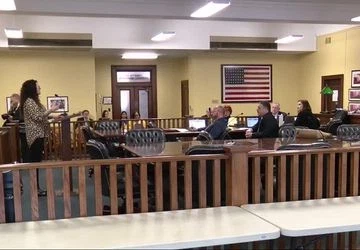
During Wednesday’s House Public Health Subcommittee meeting, lawmakers also heard testimony from Andrea Johnson, who has been in recovery for eight years.
Johnson spoke about her experience with the Cabell County Health Department’s needle exchange program, which has since ended. She said the program played a critical role in helping her begin her recovery.
“It’s the first time I have ever spoken to a recovery coach,” Johnson said. “It’s the first time I knew people really did get clean and stay clean. It’s not just the supplies and the recovery coach, but it’s a way to get connected to the community that is fighting for you instead of the community I chose to be in, which was the one where we were using.”
Del. Mike Pushkin added that syringe programs serve a broader purpose beyond needle exchanges, offering individuals an entry point into recovery.
“It also brings people into a clinical setting so they can possibly find help as well,” he said during the subcommittee meeting.
The bill now moves forward to markup and further discussion.