
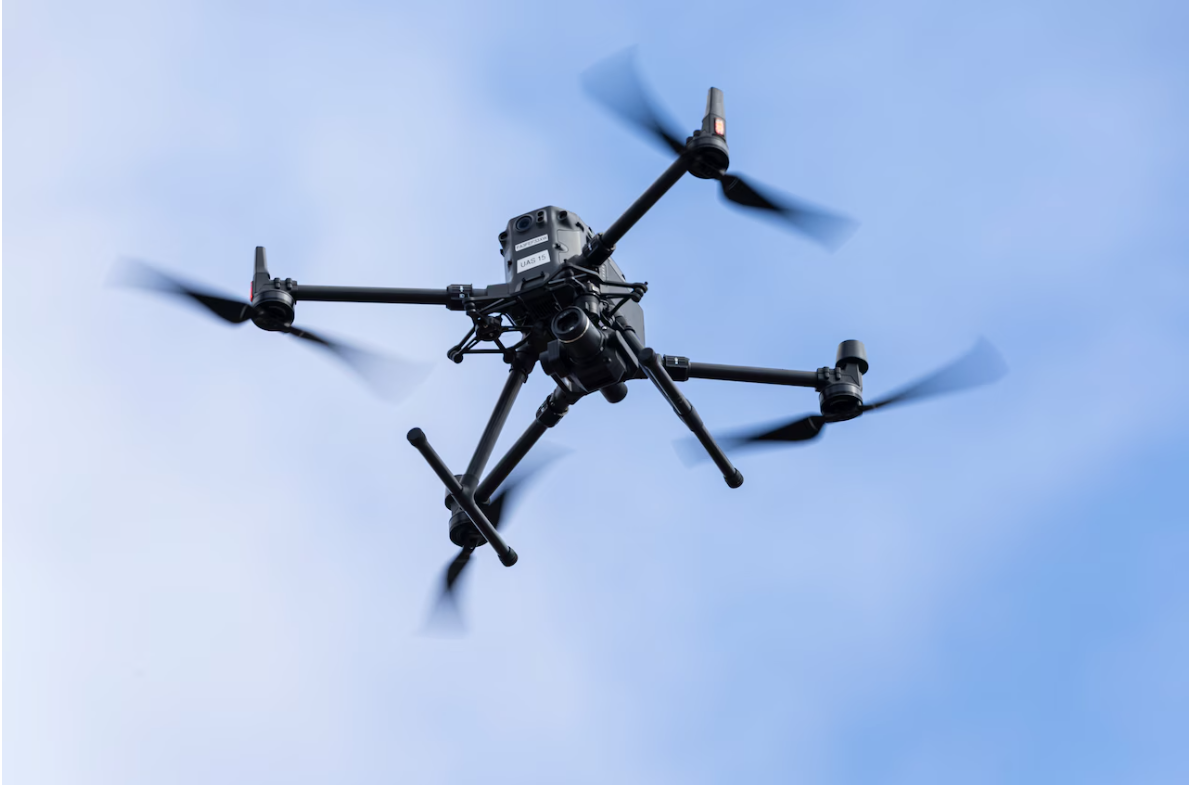
Police departments in Dearborn and Sterling Heights are deploying drones as first responders, using aerial technology that officials say can reach emergency scenes quickly and provide officers with a real-time view before they arrive.
The programs allow police to launch drones to a variety of incidents, including suspicious activity, traffic crashes, missing persons searches and fires.
However, civil liberties advocates say the growing use of aerial surveillance technology raises concerns about privacy and oversight.
In Dearborn, police have already implemented a Drone as First Responder system with six drones stationed at three locations across the city, including police headquarters and two fire stations.
Police Chief Issa Shahin said the technology gives officers immediate situational awareness before entering potentially dangerous situations.
“Prior to having a drone, our only option was to send an officer to investigate in person, and that’s far more dangerous,” Shahin said. “Being able to safely see what’s happening from a distance helps us make better decisions.”
The drones are operated by trained pilots who monitor police radio traffic and deploy the aircraft when a call for service is received.
Dearborn’s program costs about $1.5 million over five years and is funded through narcotics forfeiture funds. The drones are also integrated with the department’s real-time crime monitoring system known as FUSUS, which allows officers to view footage from drones, body cameras and other camera networks.
Shahin said the department also created a public transparency dashboard so residents can see when drones are deployed and the reason for each flight.
“Transparency is the foundation of accountability,” he said.
According to city data, Dearborn has seen a 14% year-over-year decline in violent crime, which includes robberies and assaults.
Officials in Sterling Heights are preparing to launch a similar Drone as First Responder program in the coming months.
Mayor Michael Taylor said the technology will help officers better understand situations before they arrive.
“A lot of times our police are called out to a situation and they don’t know what they’re walking into,” Taylor said. “This will give them the ability to know what’s happening even before they get there.”
Three drones will be placed at docking stations throughout Sterling Heights to provide coverage across the city.
Police Chief Andrew Satterfield said certified operators will monitor the drones and deploy them when officers need more information before responding to a call.
“Most of the time they should be able to beat an officer to certain scenes,” Satterfield said.
In some situations, he said the technology could help prevent unnecessary police responses.
“If it’s something like people reported in a park after hours and the drone shows nobody is actually there, we don’t need to send officers to check the area,” he said.
The drones may also help firefighters assess crash scenes or fires, search for missing persons and evaluate storm damage.
Sterling Heights officials say the city already has low crime rates. According to Federal Bureau of Investigation Uniform Crime Reporting data for 2024, Sterling Heights ranked as Michigan’s safest large city among communities with more than 100,000 residents, with the lowest rates of both violent and property crime, followed by Dearborn.
Sterling Heights’ drone program is expected to cost about $149,000 in the first year and around $678,000 over five years, funded through federal forfeiture funds.
“It’s a win-win because it’s not technically being paid for with taxpayer dollars, and it’s a service improvement,” Taylor said.
Other metro Detroit police agencies are also experimenting with the technology. The Taylor Police Department has begun using rooftop drones that can be launched remotely by selecting a location on a digital map.
Officials say the drones can travel up to about 45 miles per hour and reach most areas of the city within about one to one-and-a-half minutes.
Still, privacy advocates say clear policies are needed as the technology expands.
Gabrielle Dresner, a policy strategist with the American Civil Liberties Union of Michigan, said surveillance tools must be balanced with strong privacy protections.
“People have an expected right to privacy,” Dresner said. “Even in public spaces, you don’t expect to be tracked or surveilled in a way that could capture you in a net of criminal suspicion.”
Police leaders say the technology ultimately aims to improve safety for both officers and the public.
“The drone first responder program is designed to improve outcomes not just for the public, but for our officers,” Shahin said.