
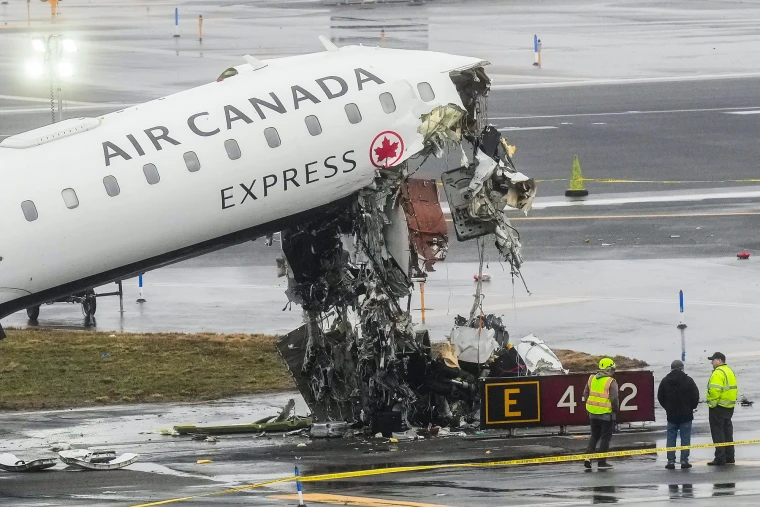
In the aftermath of a fatal crash at LaGuardia Airport, where a plane collided with a fire-rescue vehicle late Sunday, firefighters at Los Angeles International Airport have shared insights into their own emergency response systems.
Officials noted that LAX once ranked among the highest in the nation for “runway incursions”—situations where aircraft or vehicles mistakenly enter active runways. However, significant improvements have been made in recent years through coordinated safety efforts involving multiple agencies.
At Los Angeles Fire Department Station 5, Battalion Chief Lance McCloskey explained how emergency responses are initiated. He said that when an issue arises, air traffic control communicates with airport operations, which then alerts firefighting teams.
Firefighters operating specialized Aircraft Rescue and Firefighting (ARFF) vehicles undergo rigorous training and certification from the Federal Aviation Administration, with annual recertification required. They must also complete specific training to drive in restricted airport zones, including both daytime and nighttime requirements.
McCloskey emphasized that coordination between air traffic controllers and emergency crews is essential. Controllers manage communication with both pilots and response teams using separate radio channels to ensure safe operations during emergencies.
To improve response effectiveness, firefighters are trained to understand various aircraft models, including their structure, engine configurations, and emergency exit points. This knowledge proved critical earlier in March when a Boeing 787 made an emergency landing at LAX due to an engine fire mid-flight.
During that incident, the flight crew decided to evacuate passengers using both emergency slides and stairs, with firefighters assisting in carrying out the plan safely.
Over the past six months, LAFD crews have responded to 85 aircraft-related emergencies, successfully supporting safe landings and ensuring passenger safety in each case.