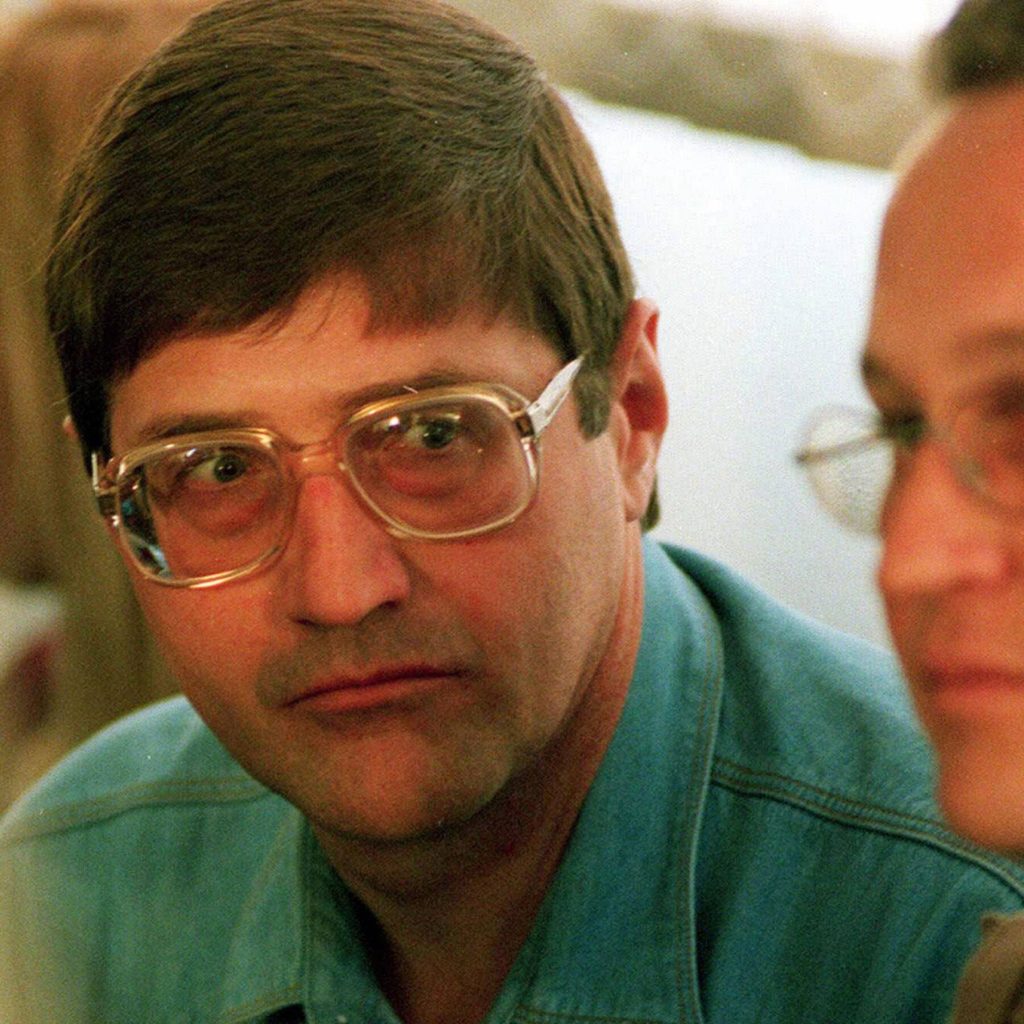


A former apartheid-era police commander, widely known as “Prime Evil,” appeared on Monday at a renewed inquiry into the 1985 killing of four anti-apartheid activists, as South Africa revisits crimes committed during decades of racial segregation.
Eugene de Kock, infamous for his role in the deaths of anti-apartheid figures, denied involvement in the high-profile case of the Cradock Four. However, he acknowledged that police at the time maintained records of nearly 6,000 activists labeled as “known terrorists,” who were to be monitored and, in some cases, killed if arrest was not possible.
He stated that the Cradock Four—Matthew Goniwe, Fort Calata, Sicelo Mhlauli, and Sparrow Mkonto—were not included on that list. The four men, three of whom were teachers, were abducted at a police roadblock and later found dead, their burned bodies marking one of the most disturbing incidents of the apartheid era.
During his testimony, de Kock revealed that a police officer connected to the killings had approached him for assistance in covering up the crime. He said the officer asked whether he could obtain another firearm and potentially manipulate ballistic evidence.
De Kock, who once led a covert counterinsurgency police unit, was sentenced in 1996 to two life terms plus an additional 212 years for crimes including murder and kidnapping linked to his actions during apartheid. He was granted parole in 2015.
Reports also note his background, including his father’s role as a magistrate with ties to former Prime Minister John Vorster. Family members described him as a quiet individual in his youth.
In later years, de Kock sought forgiveness from some victims’ families. In a letter to the relatives of lawyer Bheki Mlangeni, who was killed by a letter bomb, he expressed deep remorse, saying that living with his actions was a punishment greater than death.
Now 77, de Kock appeared in court in Gqeberha under police guard. His identity was concealed in official video footage following a judicial ruling, according to the Foundation for Human Rights, which represents some of the victims’ families.
Earlier investigations into the Cradock Four killings during the apartheid period were widely believed to have concealed the truth. One inquiry concluded the deaths were caused by unknown individuals, while another later attributed them to unidentified police officers.
The current inquiry, launched last year after persistent demands from the victims’ families, seeks to uncover the full truth. Although six former police officers were implicated and denied amnesty during South Africa’s Truth and Reconciliation Commission hearings, none were ever prosecuted. All six have since died.
Authorities have also reopened several other cases tied to apartheid-era abuses, including the deaths of Albert Luthuli, Griffiths Mxenge, and Steve Biko.
Additionally, President Cyril Ramaphosa has ordered a separate investigation to determine whether post-apartheid governments deliberately obstructed efforts to pursue justice in such cases.

Leave a Reply