
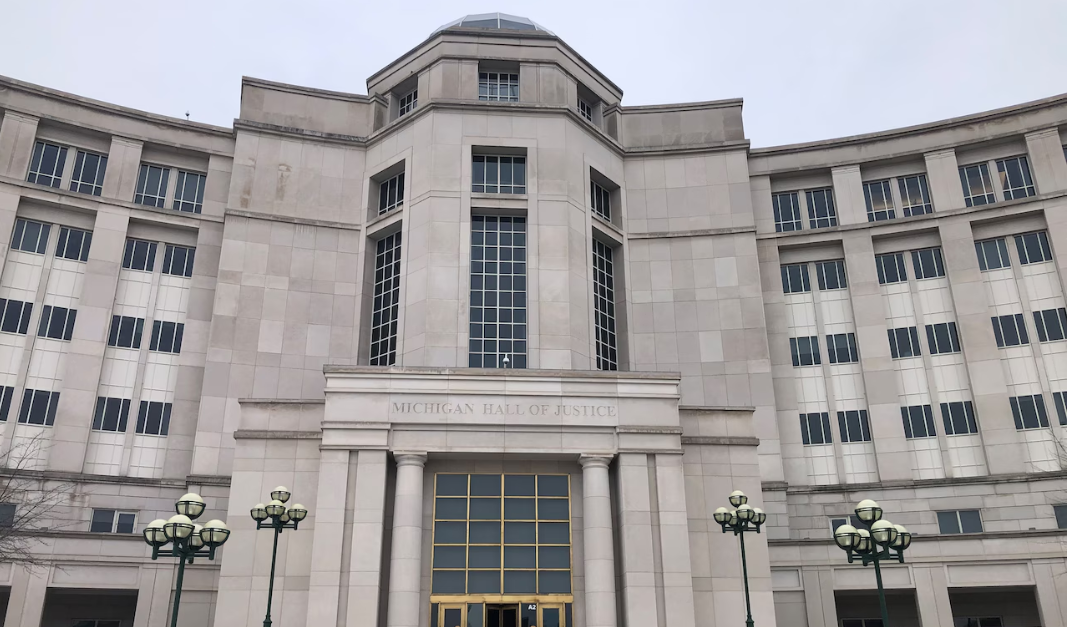
The Michigan Supreme Court is reviewing a critical case that could reshape how long prison sentences are applied to juvenile offenders, including whether a 50-year sentence amounts to a de facto life term.
Case Centers on 1992 Detroit Killing
The case involves James Eads, who was 16 years old when he fatally shot 17-year-old Eric Kincaid in Detroit in 1992.
According to court records, the shooting occurred after Eads saw Kincaid wearing clothing associated with a rival gang. Eads was later convicted of second-degree murder and sentenced to 50 to 75 years in prison, a term that exceeded standard sentencing guidelines.
Debate Over ‘De Facto Life Sentence’
At the center of the legal debate is whether such a lengthy sentence effectively condemns a juvenile to life in prison, even if parole is technically possible.
Eads’ legal team argues the sentence is unconstitutional under Michigan law, which prohibits cruel or unusual punishment, especially for minors.
Prior Rulings Expand Juvenile Protections
The court has recently strengthened protections for younger defendants:
- In People v. Stovall, it ruled that life sentences for juveniles convicted of second-degree murder are unconstitutional, even with parole eligibility.
- In People v. Boykin, it required judges to consider youth as a mitigating factor in sentencing decisions.
Additionally, the court ruled in 2025 that mandatory life-without-parole sentences for individuals under 21 violate the state constitution.
Prosecutors vs. Defense Arguments
Prosecutors argue that sentencing policies should remain under the authority of lawmakers, not courts, and that juveniles can still be held fully accountable under criminal law.
Meanwhile, Eads’ attorney contends that a sentence exceeding several decades—despite the possibility of parole—offers little realistic chance of release, effectively functioning as a life sentence.
Where Should the Line Be Drawn?
Justices questioned how to define a “de facto life sentence.” The defense pointed to federal guidance suggesting that sentences around 39 years or more could meet that threshold.
Potential Impact Across Michigan
The outcome could affect dozens of inmates statewide. Advocacy groups estimate that at least 67 prisoners convicted as juveniles may be eligible for resentencing depending on the court’s decision.
Decision Expected Soon
The Michigan Supreme Court is expected to issue its ruling before the end of its current session in July, a decision that could significantly influence juvenile justice policies across Michigan.