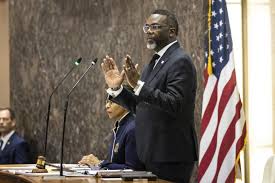


CHICAGO — Brandon Johnson held a town hall Thursday evening on the city’s West Side to discuss Chicago’s recently approved 2026 budget and hear directly from residents.
City officials presented details on what the budget includes and what it cuts.
“Last summer, you showed up. You filled rooms at budget roundtables. You asked hard questions at town halls. You also told us what’s important to you,” Johnson said.
The City Council passed the budget without the mayor’s signature, and it took effect at the start of the year.
The plan avoids new property taxes and closes a deficit of more than $1 billion, while projecting $535 million in new revenue.
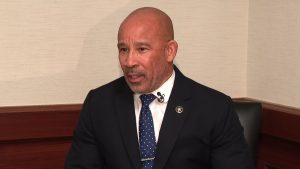
Also attending the town hall was Jason Ervin, who represents the 28th Ward and chairs the City Council’s budget committee. Ervin helped lead a pushback against Johnson’s initial proposals.
“Unfortunately, what has passed is not necessarily in the best interest of all Chicagoans,” Ervin said. “We believe there are other ways for us to balance the budget without harming our citizens in the process.”
Johnson outlined two executive orders he signed following the budget’s passage. One prevents the city from selling or transferring residents’ medical debt. The other caps overtime spending within the Chicago Police Department.
He did not address the recent downgrade of the city’s credit rating, which analysts have tied to operating deficits dating back to 2023.
Bill Conway, a member of the Committee on Finance, released a statement criticizing the city’s fiscal outlook.
“With nearly $40 billion in unfunded pensions, $25 billion in debt, and now a weaker credit rating, we must confront debt like the urgent problem it is before it crowds out funding for public safety and the services our communities rely on,” Conway said.
Johnson’s administration said it plans to hold additional town halls across the city to give more residents the opportunity to ask questions and learn about how the 2026 budget will be implemented.

Leave a Reply