
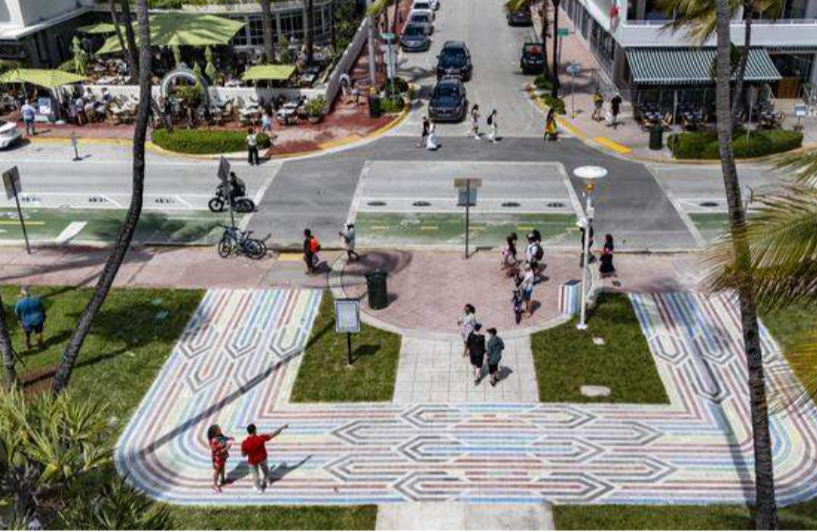
The Miami Beach has introduced a new rainbow-colored pedestrian installation, months after state officials ordered the removal of its iconic LGBTQ+ crosswalk.
A New Symbol Replaces Removed Crosswalk
City leaders revealed the redesigned space near 12th Street and Ocean Drive, just steps from where the original rainbow crosswalk once stood.
Officials clarified that the new feature is not technically a crosswalk, but a designated pedestrian area. While the original crossing has been replaced with standard gray markings, the new installation creates a vibrant rainbow design visible from above.
Built From Pieces of the Original
According to city officials, the new installation incorporates materials from the former crosswalk, symbolically preserving its legacy.
Commissioner Alex Fernandez described the project as a collective effort to transform the removed pieces into “a mosaic of love.”
Community Meaning Beyond Design
Commissioner Tanya Bhatt, who led the initiative, emphasized that the space is more than a visual landmark.
She said it represents a place where people can reflect on values such as safety, visibility, respect, and inclusion for the LGBTQ+ community.
Background: State Order and Removal
The original rainbow crosswalk was removed in October following an order from Ron DeSantis, who directed municipalities to eliminate decorative roadway markings or risk losing state transportation funding.
Despite appealing the decision, the city ultimately had to comply.
Community Response and Pride Significance
Local residents and LGBTQ+ advocates say the new installation sends a strong message of resilience and inclusion.
Community leaders noted that while the original crosswalk was removed, the spirit behind it remains intact.
The unveiling comes during Pride celebrations, culminating in the city’s annual parade, reinforcing the installation’s symbolic importance.
A Message of Resilience
Residents say the project represents more than just public art — it stands as a statement that identity, inclusion, and community pride cannot be erased.