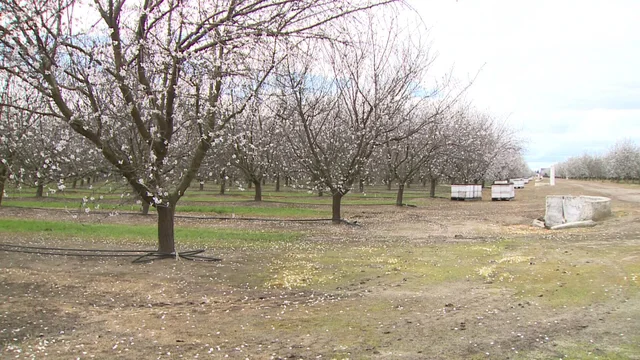



With rain in the forecast, almond farmers across California are preparing for possible disruptions during one of the most important weeks of the growing season.
Mike Weststeyn, who farms 700 acres of almonds in San Joaquin and Stanislaus counties with his son Erik, says the bloom period — which typically wraps up around March 1 — can determine the success of the entire year’s crop.
Almonds are a $5 billion industry in California, according to the University of California Agricultural Issues Center, and the state produces roughly 80% of the world’s almonds. In San Joaquin County, almonds rank as the second-largest crop.
“If we don’t have a crop to sell, that’s hard on the bottom line,” Mike said.
Weather risks during bloom
The weeks immediately after blooming are especially sensitive. Once the small green nut forms, temperatures below 32 degrees can freeze it, causing it to drop from the tree — with no chance to rebloom until the following year.
Rain also creates challenges. Ahead of the incoming storm, growers have been spraying fungicides to protect blossoms from disease.
“The last couple nights you could hear the sprayers running,” Mike said, noting that farmers are trying to safeguard orchards before fields become too wet to access.
Bees are key
Pollination is equally critical. The Weststeyns maintain about two beehives per acre to ensure proper pollination. Bees typically won’t fly in rain or in temperatures below 50 degrees, which can delay or limit crop development.
“The bees have been out, buds are pollinated,” Mike said. “If the weather clears up, they’ll get back to work.”
Crop outlook
A bumper crop typically ranges between 2,500 and 3,000 pounds per acre. Mike expects yields may fall short of that this year due to weather conditions. If production dips statewide, he hopes stronger almond prices could help offset lower output.
A family tradition
Erik, who graduated from University of California, Davis in 2024 with a degree in agricultural systems management, chose to return home to continue the family business rather than pursue higher-paying opportunities elsewhere.
“Growing the family business and hoping to pass it down someday” drew him back, he said.
Almond farming runs deep in the family. Mike grew up working alongside his father in Ripon, and his daughter now works in Sacramento for Blue Diamond Growers.
For Mike, farming alongside his son is as meaningful as the harvest itself.
“It’s special,” he said. “Having a kid that wants to farm and is willing to learn — that’s really special.”

Leave a Reply